

The Gods Themselves
Rhetoric and Myth in Sumer, Egypt, and Greece Before 355 BCE
Illuminates the geographic and cultural diversity of ancient rhetoric
The Gods Themselves examinesThe Gods Themselves examines ancient myth as a source of rhetorical precept and a tool of human persuasion. In this provocative work, Shawn D. Ramsey extends the history of rhetoric to 2650 BCE through archaeological, epigraphical, and textual sources from Mediterranean and Near Eastern myths.
In his examination of "rhetorical myths"—the stories we tell ourselves about the stories we tell ourselves—Ramsey presents rhetoric as the knowledge of principles that guide speech and writing. These narratives show rhetoric to be an abstract field of knowledge with ontological significance. The Gods Themselves highlights myths that teach rhetorical theory or praxis, such as those featuring Sumerian goddess Nisaba and Egyptian deities Seshat and Thoth, figures who personify rhetorical concepts of archival knowledge and discourse creation. Ramsey analyzes how these early myths influenced writings by the Greek thinkers Prodicus, Isocrates, and Plato. Underscoring myth's role in shaping rhetorical culture, this synchronic history bridges ancient traditions and their lasting influence on rhetorical theory.
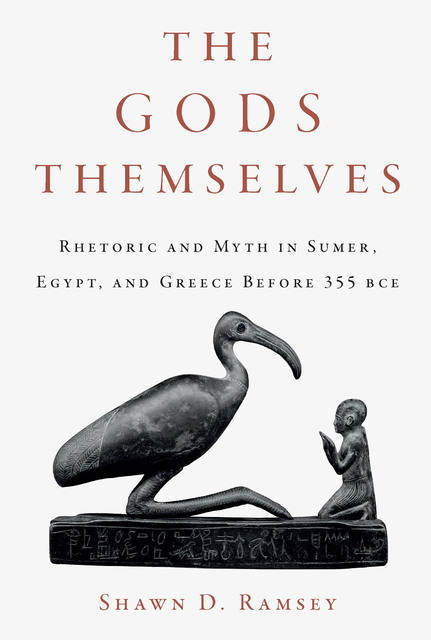
Table of Contents
Metadata
- container titleThe Gods Themselves: Rhetoric and Myth in Sumer, Egypt, and Greece Before 355 BCE
- isbn978-1-64336-656-2
- publisherUniversity of South Carolina Press
- publisher placeColumbia, SC
- restrictionsThe text of this book is licensed under a Creative Commons Attribution Non-Commercial No Derivatives 4.0. International (CC BY-NC-ND 4.0) license: https://creativecommons.org/licenses/by-nc-nd/4.0/
- rights
© 2026 by University of South Carolina
The inclusion of this book in the Open Carolina collection is made possible by the generous funding of the University of South Carolina Libraries.
- rights holderUniversity of South Carolina
- doi