

Influential Machines
The Rhetoric of Computational Performance
A new framework for understanding how algorithms influence
Web applications offer us conclusions about science. Twitter bots generate art. Machine-learning systems satirize politicians. We live in an era where a substantial share of our private and public communication is machinic. Modern computing machines cannot yet speak for themselves—although the capacities of AI are rapidly expanding—but they generate rhetorical energies as they give advice, entertain, and proffer insight, speaking to human concerns in more-than-human ways and guiding human action.
In Influential Machines Miles C. Coleman looks beyond human communication to interrogate the ways in which the machines and algorithms in our lives make meaning and the implications of their special modes of communication. Using the varied examples of an anti-vax "vaccine calculator," two Twitterbots, and the computational performances of virtual assistants, Coleman asks what machines mean to us as social agents and whether humans are the appropriate reference for designing machine communication. Coleman goes beyond the front and back ends of computing to describe the "deep end" of computing, a site of ambient rhetoric that is essential for understanding how machines move in today's digital world.
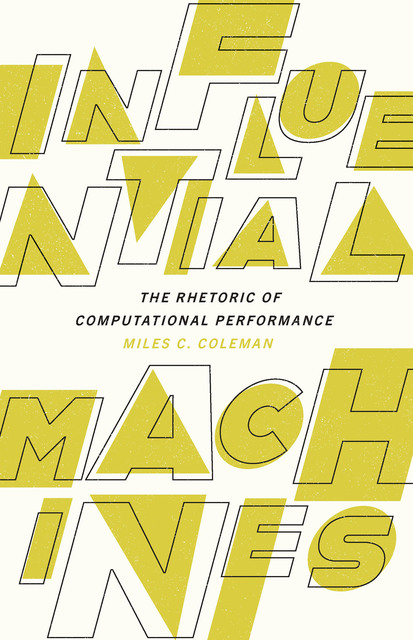

Table of Contents
Metadata
- container titleInfluential Machines: The Rhetoric of Computational Performance
- isbn978-1-64336-460-5
- publisherUniversity of South Carolina Press
- publisher placeColumbia, SC
- restrictionsThe text of this book is licensed under a Creative Commons Attribution Non-Commercial No Derivatives 4.0. International (CC BY- NC- ND 4.0) license: https://creativecommons.org/licenses/by-nc-nd/4.0/
- rights
© 2023 by University of South Carolina Press
The inclusion of this book in the Open Carolina collection is made possible by the generous funding of the University of South Carolina Libraries.
- rights holderUniversity of South Carolina
- doi